MS Hug information - updated 4/2/13

MS Hug information - updated 4/2/13
The comprehensive MS Hug post has been moved to: http://mshuginfo.blogspot.com/
Last edited by HappyPoet on Sun Apr 06, 2014 11:14 am, edited 25 times in total.
Re: MS Hug information - updated 3/22/13
when i first had ms i told my neurologist i had a tight feeling around my chest and he said he never heard of it . wtf!
Re: MS Hug information - updated 3/22/13
erinc, neurologists who don't know about the MS Hug have no business seeing MS patients. I've also heard of neuros who don't think MS causes pain! Idiots. I sure hope the tight feeling around your chest doesn't become painful and debilitating--wishing you the best of luck.erinc14 wrote:when i first had ms i told my neurologist i had a tight feeling around my chest and he said he never heard of it . wtf!
-
blossom

- Family Elder
- Posts: 1394
- Joined: Thu Dec 03, 2009 3:00 pm
- Location: south western pa.
- Contact:
Re: MS Hug information - updated 3/25/13
erinc quote: when i first had ms i told my neurologist i had a tight feeling around my chest and he said he never heard of it . wtf!
this shows how much the majority if not all of them listen to much of what the patient has to say or ask.
wonder how some of them would feel if they had a python snake wrapped around their chest squeezing them to death and they were trying to get someone to listen and help and everyone passing him by said-i don't see no snake! whats you talkin bout!
this shows how much the majority if not all of them listen to much of what the patient has to say or ask.
wonder how some of them would feel if they had a python snake wrapped around their chest squeezing them to death and they were trying to get someone to listen and help and everyone passing him by said-i don't see no snake! whats you talkin bout!
Re: MS Hug information - updated 3/25/13
I also why my feet were always red and freezing cold and he said because I wasn't walking . I knew that wasn't it because it wasn't like that before ms. now i'm a believer that they want to keep ms for themselves .
Re: MS Hug information - updated 3/25/13
Shameful that so many neurologists and MS specialists are DMD drug pushers and don't have a basic understanding of the human nervous system.
Re: MS Hug information - updated 3/25/13
I totally agree !
Re: MS Hug information - updated 3/25/13
Has anybody here ever tried a block injection (Intercostal Nerve Block) for the MS Hug (Intercostal Neuralgia) or Lidocaine I.V. ? I have had the MS Hug for about 4 years now and no drugs are helping with the pain. I am desperate for some type of pain relief so I have been researching the nerve block and lidocaine I.V. idea. They were suggested to me by a Anaesthiologist at a Pain Clinic.

Re: MS Hug information - updated 3/25/13
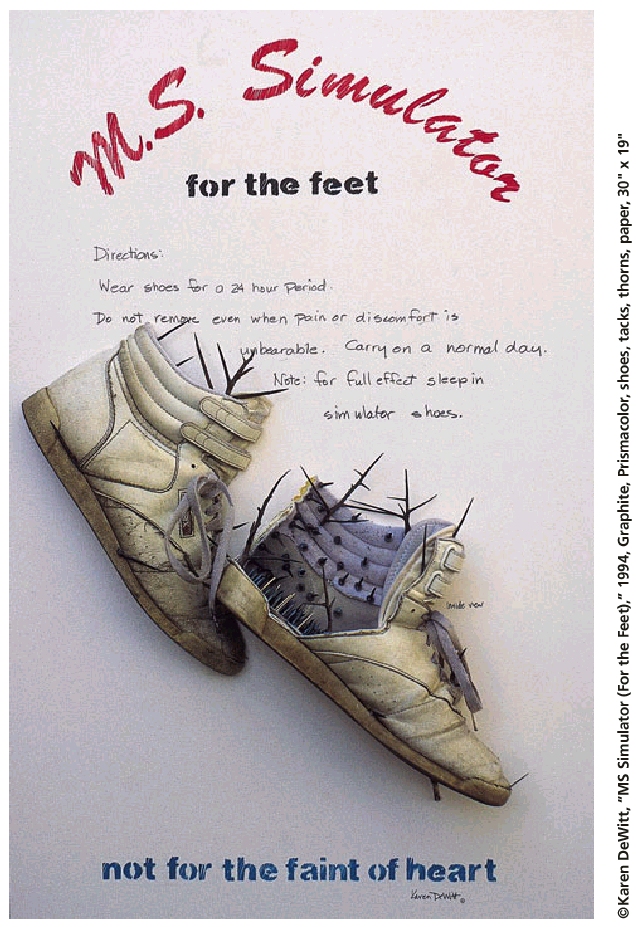
It should be a medical board requirement that MS docs walk a mile in their patient's shoes...blossom wrote:wonder how some of them would feel if they had a python snake wrapped around their chest squeezing them to death and they were trying to get someone to listen and help and everyone passing him by said-i don't see no snake! whats you talkin bout!
Re: MS Hug information - updated 3/25/13
Hi lovebug,
I get trigger point injections with lidocaine and steroid all over my back, and I get paravertebral and intercostal nerve block injections with lidocaine and steroid for the front of my torso--the back and front injections help tremendously!!
A regular MD, who works for my MS specialist, gave me the trigger point injections for my back, and an anesthesiologist, who specializes in pain management, gave me the paravertebral / intercostal nerve block injections for the front of my torso (which were actually given on the sides of my torso).
Because there is a small risk of pneumothorax (collapsed lung), fluoroscopy might be used to help guide the needle to just under/behind the rib where the intercostal nerve is located (this is called "walking off the needle") for the paravertebral / intercostal nerve block injections. I can actually feel the pressure when the needle is "walked off" my ribs, but this does not cause pain --I urge you to remain still when this is being done!
All these injections last from six to eight weeks for me; your mileage may vary. One drawback about these injections is there's a limit on how much steroid can be given per injection and per year. The lidocaine is short-acting so that the needle can enter without pain; the steroid is long-acting and is what actually helps stop the MS Hug pain.
I still need to add this information to my first post. These injections are saving me from jumping off a bridge. I hope the injections help you, lovebug. Please let us know how you make out with them and what you learn! Thx!
Edit:
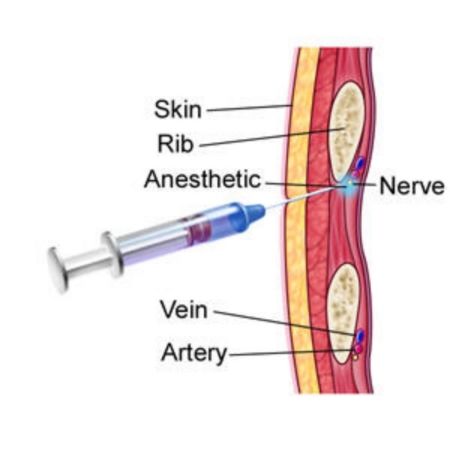
The intercostal nerve, which is the small yellow dot, is easier to see in the bottom depiction.
Picture in your mind the doctor feeling, with his/her finger, the bottom edge of your rib, then pushing in the needle at that location, then by using tiny increments, "walking off" the point of the needle until it reaches just under the curve of the rib bone but not too close to nor into the nerve itself. Use of fluoroscopy can also help guide the needle. Clinical experience counts.
Hope this helps.
I get trigger point injections with lidocaine and steroid all over my back, and I get paravertebral and intercostal nerve block injections with lidocaine and steroid for the front of my torso--the back and front injections help tremendously!!
A regular MD, who works for my MS specialist, gave me the trigger point injections for my back, and an anesthesiologist, who specializes in pain management, gave me the paravertebral / intercostal nerve block injections for the front of my torso (which were actually given on the sides of my torso).
Because there is a small risk of pneumothorax (collapsed lung), fluoroscopy might be used to help guide the needle to just under/behind the rib where the intercostal nerve is located (this is called "walking off the needle") for the paravertebral / intercostal nerve block injections. I can actually feel the pressure when the needle is "walked off" my ribs, but this does not cause pain --I urge you to remain still when this is being done!
All these injections last from six to eight weeks for me; your mileage may vary. One drawback about these injections is there's a limit on how much steroid can be given per injection and per year. The lidocaine is short-acting so that the needle can enter without pain; the steroid is long-acting and is what actually helps stop the MS Hug pain.
I still need to add this information to my first post. These injections are saving me from jumping off a bridge. I hope the injections help you, lovebug. Please let us know how you make out with them and what you learn! Thx!
Edit:
The intercostal nerve, which is the small yellow dot, is easier to see in the bottom depiction.
Picture in your mind the doctor feeling, with his/her finger, the bottom edge of your rib, then pushing in the needle at that location, then by using tiny increments, "walking off" the point of the needle until it reaches just under the curve of the rib bone but not too close to nor into the nerve itself. Use of fluoroscopy can also help guide the needle. Clinical experience counts.
Hope this helps.
Re: MS Hug information - updated 3/25/13
Hey HAPPYPOET Thank you so much for your e-mail about the injections. I am photocopying your e-mail and taking it with me when I see the Anaestiologist in May. Any idea about what can be done for numbness, pins and needles feeling in my arms to my hands. Maybe I have HOPE here..............
Re: MS Hug information - updated 3/25/13
bunch of psychopaths really .
Re: MS Hug information - updated 3/25/13
Hey LOVEBUG, yes, you can have HOPE.
erinc, yep, I'm convinced that's what my EX-neurologist thought.
erinc, yep, I'm convinced that's what my EX-neurologist thought.
Re: MS Hug information - updated 3/25/13
lovebug, here are some examples of medications that might help numbness and pins and needles:
NSAIDs (Non-steroidal anti-inflammatory meds): Ibuprofen (Motrin, Advil); Naproxen (Aleve).
Tricyclic antidepressants: Amitriptyline (Elavil); Nortripyline (Pamelor).
Anti-seizure meds: Gabapentin (neurontin); Pregabalin (Lyrica); Carbamazepine (Tegretol).
Narcotic opiates: Morphine, oxycontin, methadone, Vicodin, Lortab.
Other possible treatments include chiropractic and home remedies.
NSAIDs (Non-steroidal anti-inflammatory meds): Ibuprofen (Motrin, Advil); Naproxen (Aleve).
Tricyclic antidepressants: Amitriptyline (Elavil); Nortripyline (Pamelor).
Anti-seizure meds: Gabapentin (neurontin); Pregabalin (Lyrica); Carbamazepine (Tegretol).
Narcotic opiates: Morphine, oxycontin, methadone, Vicodin, Lortab.
Other possible treatments include chiropractic and home remedies.
Re: MS Hug information
HAPPYPOET I have tried almost ever one of those drugs besides Methadone with nooooooooo help for nerve pain. I am beginning to feel like I am some kind of `freak` when it comes to these drugs. I feel like there is something in me that prevents pain relief from nerve paIn. Now does that sound nutty!!!!!!!!!!
What home remedies do you suggest? I have tried Magnesium Glycinate and Boswellia. Not much help there either.
I went to a Pain management class today at a pain clinic and I started talking about finding out more information about block injections. Nobody had even heard of this yet!
What home remedies do you suggest? I have tried Magnesium Glycinate and Boswellia. Not much help there either.
I went to a Pain management class today at a pain clinic and I started talking about finding out more information about block injections. Nobody had even heard of this yet!